AI Chatbot vs. AI Agent: What's the Difference? (2026 Guide)
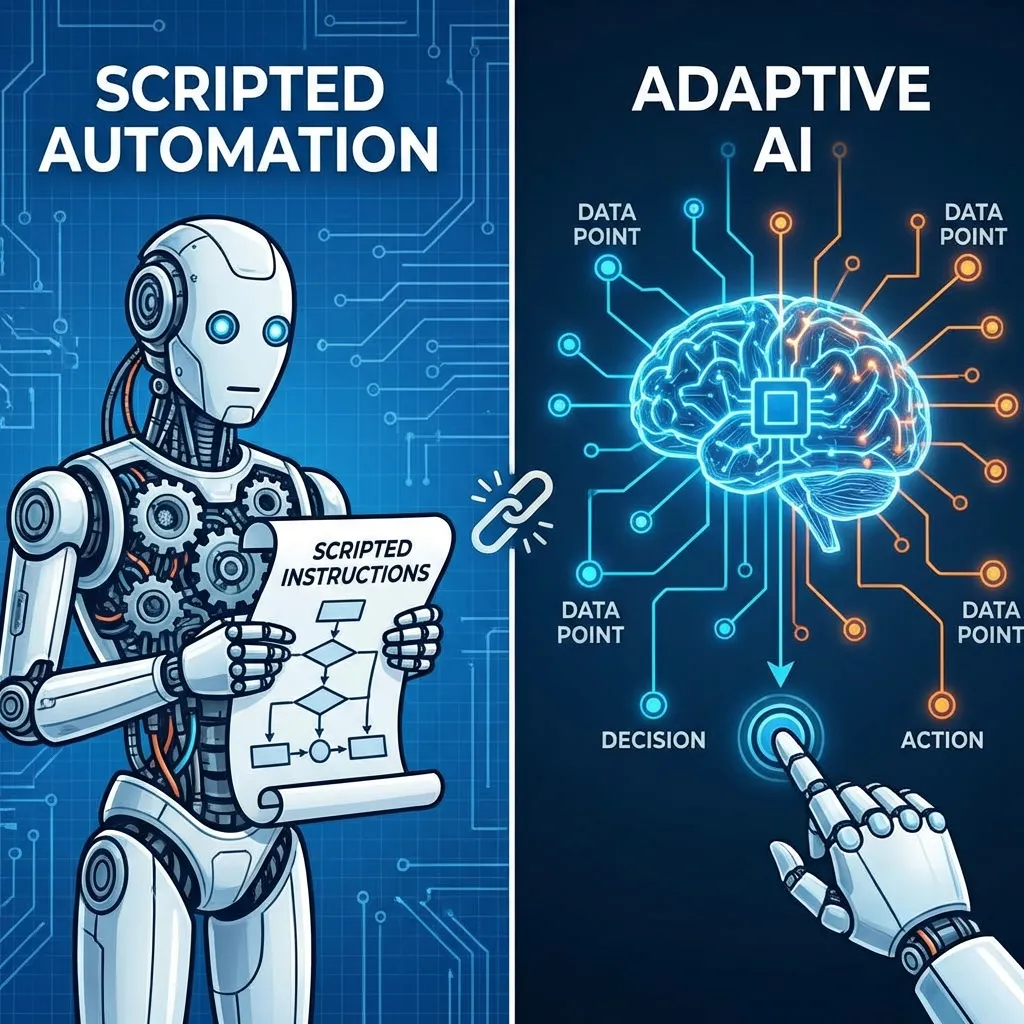
In 2024, everyone wanted a chatbot. In 2026, everyone needs an agent.
But the terms are often used interchangeably, leading to massive confusion in the market. Software vendors are rebranding their old decision-tree bots as "agents" to jump on the hype train.
Let's set the record straight.
The Core Difference: Words vs. Actions
If you remember only one thing from this article, make it this:
Chatbots are for conversation. Agents are for execution.
A chatbot helps a user find information. An agent does work on behalf of the user.
Feature-by-Feature Comparison
| Feature | AI Chatbot | AI Agent |
|---|---|---|
| Primary Goal | Answer questions | Complete tasks |
| Interaction | reactive (waits for input) | Proactive (can initiate) |
| Capabilities | Text generation, search | Tool use, browsing, API calls |
| Memory | Session-based (short term) | Persistent (long term) |
| Autonomy | Low (follows rules) | High (makes plans) |
Scenario: The "Where's My Order?" Test
Let's see how each handles a common customer request: "Where is my order #12345?"
The Chatbot:
- Recognizes the intent "order_status".
- Looks up the tracking URL in a database (if integrated) or asks the user to check their email.
- Says: "Your order #12345 is currently in transit. You can track it here: [Link]"
- Outcome: Information provided.
The AI Agent:
- Checks the shipping status via API.
- Sees that the package is delayed by 3 days due to weather.
- Reasoning: "The customer will be unhappy about the delay. I should proactively apologize and offer a discount."
- Actions: Emails the customer about the delay, generates a 10% discount code using the Shopify API, and includes it in the email.
- Outcome: Problem managed and relationship saved.
When to Use a Chatbot
Don't over-engineer. Use a chatbot when:
- Your primary goal is 24/7 support availability.
- The inquiries are repetitive and informational (FAQs).
- You have limited budget or technical resources.
- You need a simple interface for navigation or search.
When to Use an AI Agent
Invest in an agent when:
- You want to automate complex manual workflows (e.g., SDR work, data entry).
- The task requires multiple steps and decisions.
- You need the AI to interact with other software systems (CRM, ERP, Billing).
- You want to replace human labor cost, not just augment it.
The Hybrid Future
The most powerful systems today are hybrids. A chatbot serves as the front-end interface (the "receptionist") that triages requests. If the request is simple, the chatbot answers it. If the request requires action, the chatbot hands it off to a specialized agent backbone.
For example, you chat with a bot on a travel site. It answers questions about weather in Paris (Chatbot). Then you say "Book me a flight." It passes the request to a Flight Booking Agent that handles the complex transaction logic.
Understanding this distinction is key to building an AI strategy that actually delivers ROI.
We help businesses audit their workflows and deploy the right AI architecture. Book a free consultation to stop guessing and start building.
Related Articles
Ready to Automate Your Business?
Book a free consultation to discuss how AI automation can save you 40+ hours per month.
Book Free Consultation