What is an AI Agent? The Complete Guide for Business Leaders (2026)
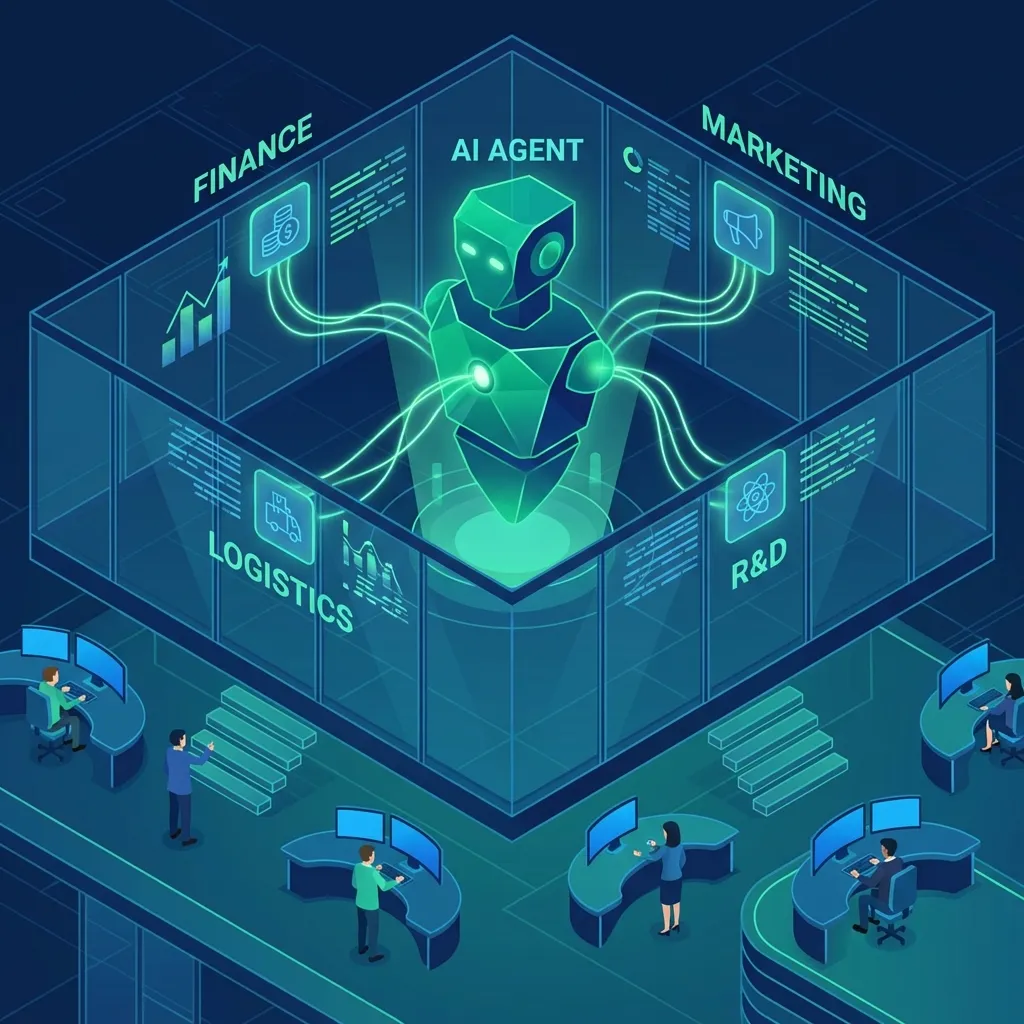
The internet has changed. We've moved from the Information Age (Google) to the Generation Age (ChatGPT). Now, we're entering the Action Age.
Welcome to the era of the AI Agent.
For business leaders, this distinction is critical. Generative AI (like GPT-4) creates content. Agentic AI performs labor.
If you're still thinking about AI as a tool for writing emails or summarizing meetings, you're missing the bigger picture. Agents don't just help you work; they do the work for you.
What Exactly is an AI Agent?
Let's strip away the buzzwords. An AI agent is a system that has three core components:
- Brain (LLM): It can reason, plan, and make decisions.
- Tools (APIs): It can interact with the outside world (send emails, browse web, query database).
- Agency (Loop): It can observe the result of its actions and correct course if needed.
Think of ChatGPT as a very smart brain in a jar. It can think brilliant thoughts, but it can't do anything. It has no hands.
An AI Agent is that same brain, but given hands (tools) and a mission.
The Evolution: Chatbot vs. Copilot vs. Agent
To understand agents, you have to understand where we came from:
| Stage | Capability | Example |
|---|---|---|
| Chatbot | Conversational informational retrieval | "What is your return policy?" |
| Copilot | Human-in-the-loop assistance | "Draft a reply to this email for me." |
| Agent | Goal-oriented autonomy | "Process all these invoices and notify me if any are over $5k." |
Real-World Business Use Cases
Agents aren't science fiction. They are running in production right now.
1. The SDR Agent
Instead of hiring a human to manually research leads on LinkedIn, find their emails, and write personalized outreach, an SDR agent does it autonomously. It reads your ideal customer profile, scans the web for matches, researches them, and sends highly personalized emails. It only notifies a human when a lead replies with interest.
2. The Operations Agent
Imagine a system that monitors your support inbox. When a customer asks for a refund, the agent reads the email, checks your CRM for the order ID, checks your policy to see if it's eligible, processes the refund in Stripe, updates the CRM, and replies to the customer confirming the refund. Zero human clicks.
3. The Research Agent
You need a competitor analysis. You tell the agent: "Research the pricing models of our top 5 competitors." The agent browses their websites, finds their pricing pages, reads their documentation, and compiles a comparison table in a Google Sheet.
Characteristics of High-Quality Agents
Not all agents are created equal. Good business agents exhibit specific traits:
- Reliability: They fail gracefully. If a tool breaks (e.g., website is down), they verify the error and retry or notify a human, rather than hallucinating success.
- Determinism: For business logic, you want predictable outcomes. Agents should follow strict SOPs (Standard Operating Procedures).
- Auditability: You need to see exactly what the agent did. "Why did you refund this customer?" The agent should provide a log: "I saw the order was within 30 days and the item was marked damaged."
How to Prepare Your Business for Agents
If you want to deploy agents in 2026, you need to be "Agent-Ready." This means:
1. API-First Infrastructure
Agents need digital handles to grab onto. If your software doesn't have an API (e.g., legacy on-prem systems), agents can't easily control it. Move to modern, API-accessible SaaS tools.
2. Structured Data
Agents thrive on clean data. If your CRM is a mess of duplicates and unstructured notes, your sales agent will fail. Clean data is the fuel for agentic reasoning.
3. Documented SCOPs
You can't automate what you can't define. Before building an agent, you need a clear Standard Operating Procedure (SOP) that a human would follow. Agents are best at executing well-defined workflows.
The Future of Work
We are moving toward a future where every employee has a team of agents reporting to them.
Your marketing manager will direct a Content Agent, a SEO Agent, and a Social Media Agent. Your sales director will manage a fleet of SDR Agents. Your developers will supervise Coding Agents.
The role of the human shifts from "doer" to "manager" and "strategist." The value of a human employee will be measured not by how fast they type, but by how well they can orchestrate a swarm of AI agents to achieve a business goal.
We build custom AI agents that automate complex workflows sales, operations, and support. Book a strategy call to discuss your automation roadmap.
Related Articles


Ready to Automate Your Business?
Book a free consultation to discuss how AI automation can save you 40+ hours per month.
Book Free Consultation