How I Got a 13.2% Reply Rate on Cold Email (Copy Breakdown)
Cold email has a reputation problem. Most people send generic templates to purchased lists and wonder why nobody responds. The reality: cold email works exceptionally well when you respect the craft.
This breakdown covers the actual email copy I used to book 7 qualified meetings, plus the infrastructure work that got those emails into inboxes instead of spam folders.
The Results
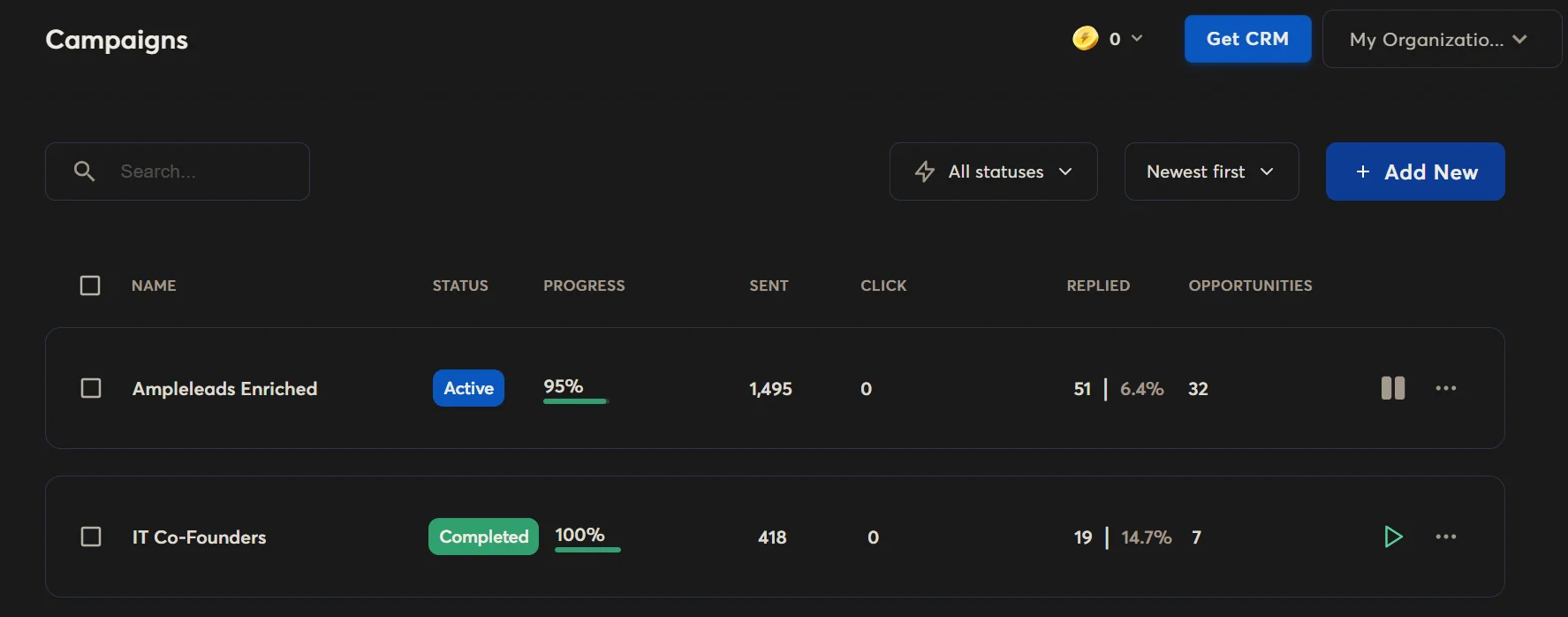
Here are the numbers from this campaign targeting IT company co-founders:
- Emails sent: 363
- Replies received: 17
- Reply rate: 13.2%
- Meetings booked: 7
- Meeting conversion: 41% of replies
Industry benchmarks put average cold email reply rates at 1-5%. This campaign delivered nearly 3x the high end of that range. The difference came down to copy structure and email infrastructure.
The Email Copy Breakdown
Here is the exact template structure. I will break down why each element matters.
1. Personalized Icebreaker
The email opens with a custom icebreaker for each recipient. Not "I saw your company does X"—that is generic and immediately signals mass outreach.
Real personalization means something specific to the person. A recent LinkedIn post they wrote. A company milestone. A hiring signal. Something that proves you actually looked at them before hitting send.
This is non-negotiable. Generic opens get deleted. Personalized opens get read.
2. One Sentence Introduction
"I run an agency that offers lead generation and outreach automation to founders like yourself."
No fluff. No mission statement. No paragraph about company history. One line that tells them exactly what you do and who you do it for.
Clarity beats cleverness. They should understand your value proposition in under 3 seconds.
3. Social Proof with Specificity
"Clients have generated 30,000+ qualified leads using my custom-built systems."
Numbers beat adjectives. "Great results" means nothing. "30,000+ qualified leads" means something.
Specificity builds credibility. Vague claims suggest you have nothing concrete to share. Specific numbers suggest you track results because you have results worth tracking.
4. Case Study
"I helped Palvoria Properties book 150 appointments in under 30 days."
Name. Result. Timeframe. That is the formula.
A named client is more credible than "a client." A specific result is more believable than "improved their pipeline." A timeframe adds urgency and demonstrates speed.
If you cannot share client names, use industry descriptions: "a Series A SaaS company" or "a 50-person real estate team." Something that proves the work happened.
5. Risk Reversal Guarantee
"I'm so confident in my approach that I offer a 30-day satisfaction guarantee or I'll keep working for free until you see results."
This removes friction. The prospect's biggest fear is wasting money on something that does not work. A guarantee eliminates that fear.
If you believe in your service, back it up. If you cannot offer a guarantee, ask yourself why.
6. Irresistible Offer
"Plus, you pay nothing upfront—only when you close your first customer from the leads I generate."
Zero risk for them. All risk on you. That is confidence.
This offer structure works for lead generation because results are measurable. You can adapt the principle for other services: free pilots, success-based pricing, or milestone-based payment terms.
The goal is making "yes" easier than "no."
7. Soft Close
"Curious if this makes sense for {{companyName}}? Let me know."
Not "Can we hop on a call?" Not "Are you available Tuesday?" Not "Would Thursday at 2pm work?"
Just... curious.
The less pressure, the more replies. A soft close invites a conversation. A hard close demands a commitment. People reply to conversations. They ignore demands from strangers.
The Infrastructure Nobody Talks About
Great copy in a spam folder produces zero replies. Before sending a single email, you need the infrastructure to actually reach inboxes.
Domain Warming
New email accounts cannot send hundreds of emails on day one. Email providers track sending patterns. A sudden spike in volume from a new account looks like spam.
I warmed up mailboxes for 2+ weeks before launching the campaign. This means starting with 5-10 emails per day and gradually increasing volume while maintaining engagement.
DNS Authentication
Three records must be configured correctly:
- SPF (Sender Policy Framework): Tells receiving servers which mail servers are authorized to send email for your domain
- DKIM (DomainKeys Identified Mail): Adds a digital signature to your emails proving they came from your domain
- DMARC (Domain-based Message Authentication): Tells receiving servers what to do with emails that fail SPF or DKIM checks
Without these records, your emails look suspicious to spam filters. With them, you pass authentication checks that most spam cannot pass.
Sending Volume Limits
I kept sending volume below 30 emails per day per inbox. Higher volumes trigger spam filters and damage domain reputation.
This is why professional cold emailers use multiple inboxes and multiple domains. Spreading sends across infrastructure protects each individual sending reputation.
Multiple Domains
Your main business domain should not be used for cold outreach. If cold emails damage that domain's reputation, your regular business communication suffers.
Use separate domains for outreach. If one gets flagged, your other domains and your primary domain remain unaffected.
Why Most Cold Email Fails
If your reply rate is under 5%, it is usually one of two problems:
Problem 1: Your copy does not give them a reason to care.
Generic copy, weak offers, no social proof, hard closes. The email reads like every other pitch in their inbox. Delete.
Problem 2: Your emails are not landing in the inbox.
Bad infrastructure means spam folder. You could write the greatest cold email ever conceived and it would produce zero replies if nobody sees it.
Fix both. Then watch the replies come in.
The Full Template
Here is the complete email structure for reference:
{{Icebreaker}}
I run an agency that offers lead generation and outreach automation to founders like yourself. Clients have generated 30,000+ qualified leads using my custom-built systems.
I helped Palvoria Properties book 150 appointments in under 30 days. I'm so confident in my approach that I offer a 30-day satisfaction guarantee or I'll keep working for free until you see results.
Plus, you pay nothing upfront—only when you close your first customer from the leads I generate.
Curious if this makes sense for {{companyName}}? Let me know.
Thanks,
{{sendingAccountFirstName}}
Repliix | repliix.com
What to Do Next
If you want to build a cold email system that books qualified calls consistently:
- Audit your current copy against the 7-element structure above. Which pieces are missing?
- Check your infrastructure. Verify SPF, DKIM, and DMARC records. Warm up any new inboxes before sending volume.
- Test and iterate. Send small batches, measure reply rates, adjust copy, repeat.
Cold email is a system. The copy is one component. The infrastructure is another. Both must work together for results.
13.2% reply rates are not magic. They are the result of respecting the craft and doing the foundational work that most people skip.
Related Articles


Ready to Automate Your Business?
Book a free consultation to discuss how AI automation can save you 40+ hours per month.
Book Free Consultation